From Ancient Figurines to Fengxiang Painted Clay: The Story of Chinese Folk Sculpture
In the villages of western Shaanxi, families have long brought home brightly painted clay animals and faces — tigers, horses, zodiac creatures, hanging plaques — not only as toys or ornaments, but as companions of blessing. Locals call this work ni huo, “clay goods.” Today it is known more widely as Fengxiang painted clay sculpture, a folk art centered in Liuying Village, in Fengxiang, Shaanxi Province. To understand why these figures still feel so alive, it helps to follow a longer story: China’s habit of shaping earth into beings that watch, bless, and remember.
A long memory in clay
China’s conversation with clay is ancient. At the Hongshan-culture ritual center of Niuheliang in Liaoning — a site dated, in UNESCO’s tentative World Heritage listing, to about 5,500 to 5,000 years ago — archaeologists recovered clay figures of women, including a life-size head, from the so-called Goddess Temple, along with animal-shaped sculptures. These were ritual images, not market toys. Yet they already show something essential: people in early China trusted clay to hold a face, a presence, and a prayer.
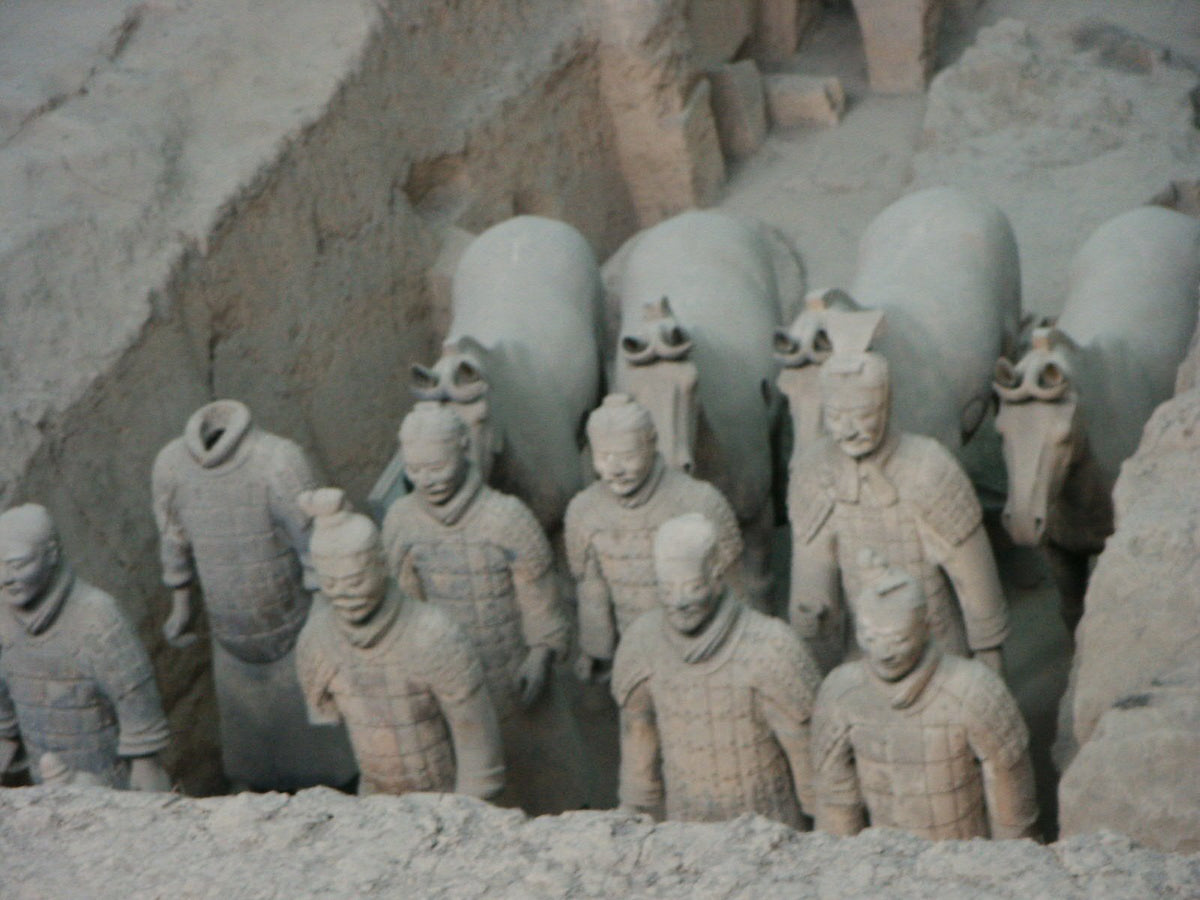
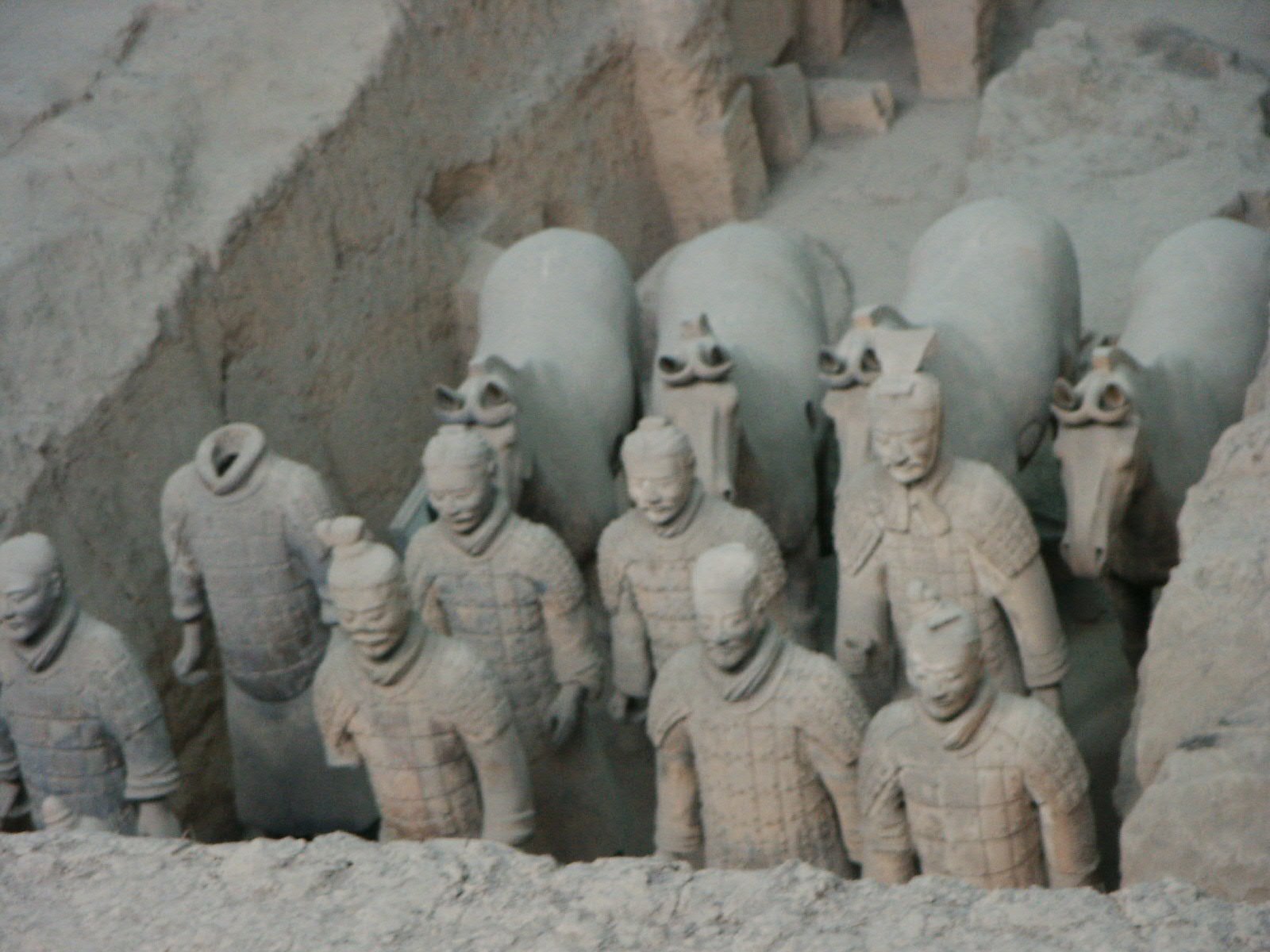
Centuries later, in Shaanxi itself, that impulse reached a monumental scale. Near present-day Xi’an, the mausoleum of Qin Shi Huang, the first emperor of a unified China, who died in 210 BCE, was surrounded by an army of life-size terracotta warriors, horses, and chariots. The pits were not discovered until 1974; UNESCO inscribed the mausoleum as a World Heritage Site in 1987. These figures are fired terracotta — kiln-hardened earthenware made for an emperor’s afterlife, not the air-dried folk clay of later village workshops. They still belong to a deep regional practice of giving clay a human and animal form.

The Han dynasty that followed continued the custom on a more intimate scale. Tombs were furnished with painted earthenware attendants, warriors, animals, and household models, often called mingqi, or spirit objects. In Shaanxi, the Yangling Mausoleum of Emperor Jing, who reigned from 157 to 141 BCE, has yielded painted earthenware warrior figurines: smaller than the Qin army, yet still vividly human. The official national heritage description of Fengxiang painted clay notes that tombs in the county from the Spring and Autumn and Warring States periods, as well as from the Han and Tang, have also yielded clay burial figurines. These funerary works are a distant background, not a direct workshop pedigree, for the painted toys of Liuying Village. The materials and purposes differ. What continues is the belief that a figure made from earth can stand in for protection, memory, and hope.


When clay came home: Tianjin, Wuxi, and Fengxiang
By the Ming and Qing dynasties, painted clay figurines had become a beloved folk art, made not only for tombs and temples but for markets, festivals, and family rooms. On May 20, 2006, China’s State Council published the first national list of intangible cultural heritage. Under the heading “Clay sculpture” (item VII-47), it jointly recognized four living traditions: Clay Figurine Zhang of Tianjin, Huishan clay figurines of Wuxi in Jiangsu, Fengxiang clay sculpture of Shaanxi, and the clay whistles of Xun County in Henan.
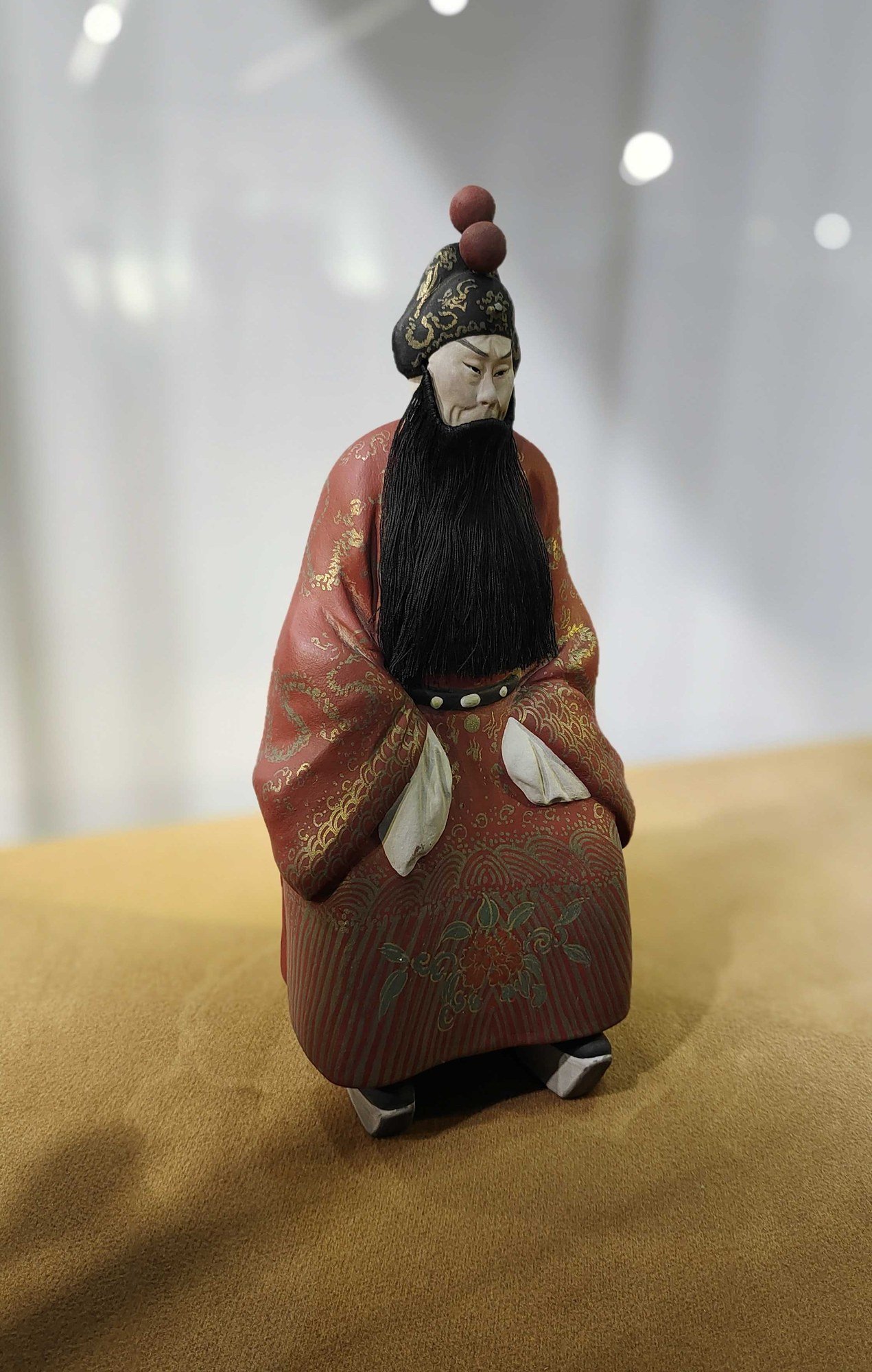
In Tianjin, the school known as Niren Zhang, or Clay Figurine Zhang, was founded by Zhang Mingshan (1826–1906) in the late Qing dynasty. He learned the craft from his father and became famous for figures that seemed to breathe — opera roles, everyday people, and characters from literature. His art is often more realist than the bold, emblematic animals of Fengxiang, yet both belong to the same family of painted clay.

In Wuxi, Jiangsu, the craft known as Huishan clay figurines grew up around Huishan Mountain. The city’s official account traces it to the late Ming dynasty, with professional workshops flourishing in the Qing. Its best-loved image is Da A Fu, a plump, cheerful child who stands for kindness, joy, and good fortune — a southern cousin, in spirit, to Fengxiang’s protective tigers and blessing toys.


Liuying Village and the making of Fengxiang painted clay
Fengxiang sits on the western Guanzhong Plain, in the Baoji region of Shaanxi. The living center of the craft is Liuying Village and its surroundings, in what was Fengxiang County when the heritage listing was made. According to local tradition, recorded in the official national heritage description, a Ming-dynasty military camp — the “sixth battalion,” liu ying — was once stationed here. When the soldiers settled as farmers, some returned to skills of working clay that they had known before enlistment. They found a local earth of unusual stickiness, called banban tu, and began to model, mold, and paint figurines to sell at temple fairs. Neighbors brought the pieces home to pray for children, protect the young, ward off harm, guard the house, and welcome good fortune.
That Ming story is the origin tale of the village craft as it is practiced today. It should be held with care: it is tradition, not a dated founding charter, and archaeological finds in the county show that people here shaped clay figures long before the Ming. What is clear is the method and the feeling of the work. Artisans mix the sticky local clay with paper pulp and other binders so that it will dry without easily cracking. Forms are pressed in molds or modeled by hand, then left to air-dry — not fired in a kiln, as the Qin terracotta warriors were. A white ground is brushed on, lines are drawn, and the surface is painted in a few strong colors, often scarlet, green, and yellow, bound by a black outline. The palette is festive and purposeful. In local explanation, green can suggest longevity and red a year of happiness; peonies, pomegranates, and coins carry wishes for blessing, children, and abundance.
The official heritage record divides Fengxiang painted clay into three families. The first is toys, especially animals and the twelve zodiac creatures. The second is hanging plaques — reliefs of tiger heads, ox heads, lion heads, opera faces, and auspicious scenes such as a qilin bringing a child. The third is standing figures, drawn from folklore and history. More than 170 varieties have been counted, from a squatting tiger nearly half a person’s height to a rabbit small enough to sit in the palm.
A clay horse on a New Year stamp
For a long time, Fengxiang clay remained a regional art, sold at fairs and loved in the countryside. Then, on January 5, 2002, China issued a set of special stamps for the Year of the Horse, the Ren-wu year. The first stamp, titled “Victory upon Arrival by the Horse” (Ma dao chenggong), took as its design a clay toy horse from Fengxiang County in Baoji, Shaanxi — a folk horse in black and white, set against a bright red ground. The set was designed by Wang Huming. Official and local accounts later note that a Fengxiang clay sheep appeared on the following year’s stamps as well. A village art had entered the national New Year imagination.
Four years later, Fengxiang clay sculpture was inscribed, with its sister traditions, on that first national intangible cultural heritage list. The recognition was both an honor and a charge: to keep the craft’s cultural meaning alive, not only its marketable charm.
A tradition that still dries in the open air
The beauty of Fengxiang painted clay is that it never needed to become monumental to matter. It is a household art: a tiger on the wall, a horse on the table, a zodiac animal given to a child. It grew from the same long Chinese practice of trusting clay with a face, but it lives by a quieter method — local earth, patient air-drying, and colors that speak of blessing.
That is the lineage FOLKTERRA looks to. Our pieces are handmade in the spirit of this folk tradition and are air-dried, not kiln-fired; they are works of painted clay, not ceramic or porcelain. If you would like to see how the vocabulary of Fengxiang — its animals, its hanging forms, its festival color — continues today, you are welcome to visit our Fengxiang clay collection, or to write to us at hello@folkterra.com.
Sources
The following sources were used to check names, dates, and historical claims in this article.
- State Council of the People’s Republic of China, “Notice on the Publication of the First National List of Intangible Cultural Heritage,” Guo Fa [2006] No. 18, May 20, 2006. https://www.gov.cn/zwgk/2006-06/02/content_297946.htm
- China Intangible Cultural Heritage website, “Clay sculpture (Fengxiang clay sculpture),” project no. 346 / VII-47. https://www.ihchina.cn/project_details/14043.html
- UNESCO World Heritage Centre, “Mausoleum of the First Qin Emperor.” https://whc.unesco.org/en/list/441/
- UNESCO World Heritage Centre, Tentative List: “Sites of Hongshan Culture: The Niuheliang Archaeological Site, the Hongshanhou Archaeological Site, and Weijiawopu Archaeological Site.” https://whc.unesco.org/en/tentativelists/5804/
- People’s Daily Online, “Tales of the Year of the Horse stamps” (Chinese), January 14, 2014. http://politics.people.com.cn/n/2014/0114/c70731-24116467.html
- China Philately catalog entry, “2002-01, Year of Horse (2002 Ren-Wu Year).” https://chinesestamp.org/2002-01-year-of-horse-2002-ren-wu-year%E3%80%8A%E5%A3%AC%E5%8D%88%E5%B9%B4%E3%80%8B/
- People’s Daily Online (English), “China Issues Stamps for Year of Horse,” January 6, 2002. https://en.people.cn/200201/06/eng20020106_88105.html
- Wuxi Municipal Government, “Huishan clay figurine (惠山泥人).” http://en.wuxi.gov.cn/2025-10/13/c_1131193.htm
- China Daily (government channel), “The legacy of Tianjin’s Clay Figurine Zhang,” August 29, 2025. https://govt.chinadaily.com.cn/s/202508/29/WS68b15359498e23165e067473/the-legacy-of-tianjins-clay-figurine-zhang.html
- China Daily, “Fengxiang county: home of the clay sculpture,” July 10, 2007. https://usa.chinadaily.com.cn/culture/2007-07/10/content_11935812.htm
- China Today, “Clay Figurines in China (I),” January 7, 2011. http://www.chinatoday.com.cn/ctenglish/se/txt/2011-01/07/content_323531_2.htm
- Shaanxi Normal University cultural-heritage page, “Fengxiang clay sculpture” (Chinese). https://lishiwenhua.snnu.edu.cn/info/1595/14638.htm
- Fengxiang District People’s Government, “Fengxiang clay sculpture” (Chinese). http://www.fengxiang.gov.cn/col6086/col6098/202001/t20200113_510752.html