
Air-Dried Clay, Not Ceramic: What You're Actually Buying
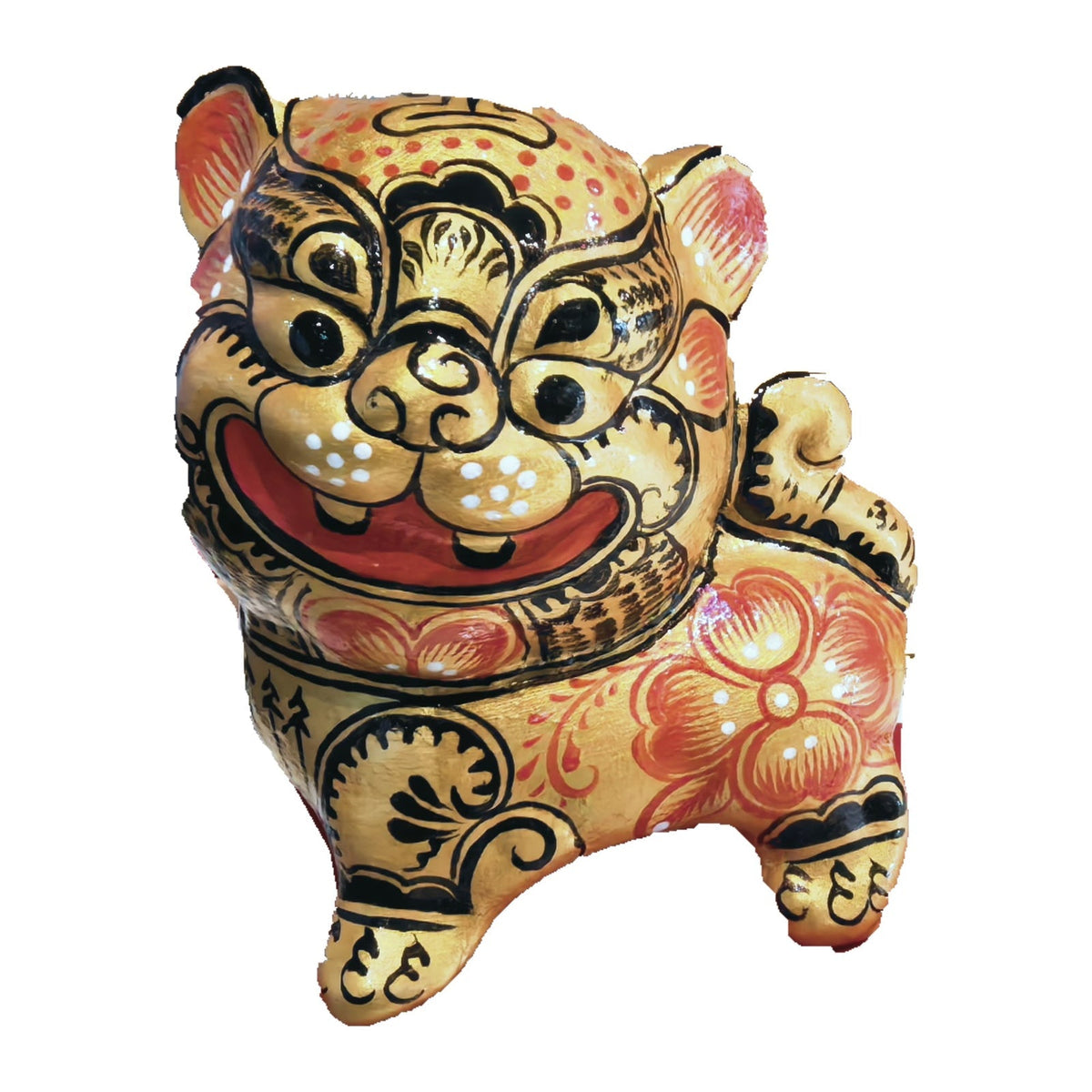
"Is this ceramic?" It is one of the first questions buyers ask about a Fengxiang clay figure — and the honest answer is no. Not because the piece is lesser, but because it is a different thing altogether: a painted clay sculpture that is air-dried and never enters a kiln. If you are used to mugs, vases, and porcelain, that difference changes what the piece feels like in your hand, what it can survive, and how you should look after it. This is what you are actually buying.
What "ceramic" means — and why it does not apply here
Ceramic is a broad word, but it has one defining step: firing in a kiln. A potter shapes wet clay, dries it, and then fires it at temperatures that transform the material itself. Earthenware is fired at roughly 900–1,150°C; stoneware at about 1,200–1,300°C; porcelain at 1,200–1,400°C. At those temperatures the clay particles begin to fuse — a process called vitrification — and the body becomes dense, hard, and far less porous. That is why a stoneware mug can hold hot tea and a porcelain plate can ring when you tap it.
A Fengxiang figure never goes through that transformation. It is shaped from local sticky clay (banban tu) mixed with plant fiber, pressed in a hand-carved mold, refined by hand, and left to dry slowly in the open air. Once dry it receives a white ground, a fine black ink outline, bold mineral colors, and a varnish seal — all painted onto the dried surface. There is no kiln in the process at all, and no glaze. The finished piece is clay, paint, and varnish: a sculpture, not a pot.
| Fengxiang clay figure | Earthenware | Stoneware / porcelain | |
|---|---|---|---|
| Fired in a kiln? | Never — air-dried | Yes, ~900–1,150°C | Yes, ~1,200–1,400°C |
| Body | Porous, soft clay | Porous | Dense, vitrified |
| Surface | Painted + varnished | Usually glazed | Usually glazed |
| Holds water? | No | Only with glaze | Yes |
| Use | Indoor display only | Tableware, planters | Tableware, planters |
Why it is never fired
The reason is the craft itself. Fengxiang painting is done on the dried clay: the white ground, the ink outline, and the bright reds, greens, and yellows are all laid down by brush after the figure has dried, and a varnish seals the surface. Firing would destroy that painted surface — and with it, the whole point of the work. The colors, the flowers, the expressions: they exist because the piece stays out of the kiln.
This is also why no two pieces are identical. The form is molded, but the refining, the outline, and the painting are all done by hand, so each figure carries the small differences of the hands that made it. A kiln-fired piece can be reproduced in identical batches; a Fengxiang figure cannot, quite.
How Fengxiang clay figures are made — from raw earth to the final brushstroke.
How to tell when it arrives
You do not need any tools — your hands will tell you. A Fengxiang figure feels surprisingly light for its size, because the body is porous dried clay rather than dense fired ceramic. Tap it gently with a fingernail and you will hear a dull, soft note, not the clear ring of porcelain or the hard knock of stoneware. The surface is matte and painted, not glassy: you can see brushwork in the outline and the flat strokes of color, and the base is unglazed clay rather than a glazed foot ring.
If you already own a ceramic vase of similar size, pick up both. The difference in weight and sound is immediate, and it is the quickest way to understand what you have bought. The full 8-step making process is in our Collector's Guide.
What it can — and cannot — do
Because the body is porous and never vitrified, water is the one thing to keep away. A Fengxiang figure is not a vase, a planter, or a food vessel: it cannot hold water, it should never be washed, and it should never be used for food or drink. Treat it as what it is — decorative art for a shelf, a desk, or a mantelpiece.
Living with it is simple, and the full care notes are in our Collector's Guide. In short: display it indoors in a dry place on a stable surface, handle it gently with both hands, dust it with a soft, dry brush, and keep it out of prolonged direct sunlight and away from water and harsh cleaners. Read the full care notes in our Collector's Guide.
It is also more fragile than ceramic. A kiln-fired mug can survive a knock that would chip a clay figure, and a dropped Fengxiang piece can crack or lose a painted edge. That fragility is not a defect — it is the nature of air-dried clay, and it is why the pieces travel in reinforced packaging. When your piece arrives, open the box carefully, keep the packaging while you inspect it, and photograph anything that looks damaged on delivery day: damaged arrivals may be replaced free or fully refunded. Read our returns and aftercare terms.
What you are actually buying
You are buying a piece of a living village craft, not a factory ceramic. The clay comes from Liuying Village in Fengxiang, Baoji, Shaanxi; the tradition entered China's first national intangible cultural heritage list in 2006; and each figure is shaped and painted by hand, signed and numbered by the artisan, and accompanied by a numbered certificate. The tiger that guards a shelf, the zodiac animal that marks a birth year — these are wishes made solid, in painted clay. The Fengxiang Clay Tiger · How to Choose a Chinese Zodiac Animal Gift
It will not hold your flowers. It will not survive the dishwasher. But on a dry shelf, dusted now and then and handled with care, it will keep its colors and its watch for years — which is exactly what it was made to do. Browse the Fengxiang clay collection, or write to us at hello@folkterra.com if you would like help choosing — or a piece made to order.